TED Teacher+ Beyond Teaching


Representing the next-generation vision of teaching embraced by TED University’s Faculty of Education, the TED Teacher+ model offers a contemporary redefinition of the traditional teacher profile. Today, teachers are prepared not merely to transmit knowledge, but to make meaningful use of technology, think critically with data, adopt a design-oriented approach, and demonstrate ethical responsibility and global awareness. Structured around learning engineering competencies, the program encompasses courses that integrate technology, pedagogy, and content, as well as micro-credential modules and experiential learning environments.

Teacher+: A Next-Generation Teaching Model
Teacher+ is an innovative educational model developed by the TED University Faculty of Education to prepare teachers for the evolving landscape of future education. Within this model, teachers are educated not merely as transmitters of knowledge, but as professionals who effectively leverage technology, think analytically through data, and intentionally design learning experiences.
The Core Principles of the Teacher+ Model
The Teacher+ model brings together contemporary approaches to teacher education within an integrated framework:
- Integration of technology, pedagogy, and content knowledge
- A learning engineering approach
- Design thinking
- Data-informed decision-making
- A global perspective on education
Experiential and Technology-Enhanced Learning
Through the Teacher+ program, pre-service teachers:
- Engage in hands-on learning experiences within innovative learning laboratories.
- Explore AI-supported learning analytics and their applications in education.
- Examine digital ethics scenarios to strengthen ethical reasoning and professional judgment.
- Design authentic learning experiences, translating theory into meaningful educational practice.
Alignment with International Standards
The Teacher+ model is aligned with internationally recognized competency frameworks such as ISTE (International Society for Technology in Education) and the EQF (European Qualifications Framework). This alignment ensures that teacher candidates develop a profile that enables them to participate effectively and compete successfully within the global educational landscape.
<p>
<iframe width="560" height="315" src="https://www.youtube.com/embed/1HkgamU6wvg?si=2n9KpCAH6EHvxl8c" title="YouTube video player" frameborder="0" allow="accelerometer; autoplay; clipboard-write; encrypted-media; gyroscope; picture-in-picture; web-share" referrerpolicy="strict-origin-when-cross-origin" allowfullscreen=""></iframe>
</p>
Experiential and Technology-Enhanced Education
Pre-service teachers in the TED Teacher+ program:
- Engage in hands-on activities in innovative learning laboratories.
- Gain exposure to AI-powered learning analytics applications.
- Develop ethical decision-making skills by exploring digital ethics scenarios.
- Translate theory into practice by designing authentic learning experiences.
Alignment with International Standards
The TED Teacher+ model is aligned with international competency frameworks such as ISTE (International Society for Technology in Education) and EQF (European Qualifications Framework). This framework supports the development of pre-service teachers as effective, adaptable, and competitive professionals within the global education ecosystem.

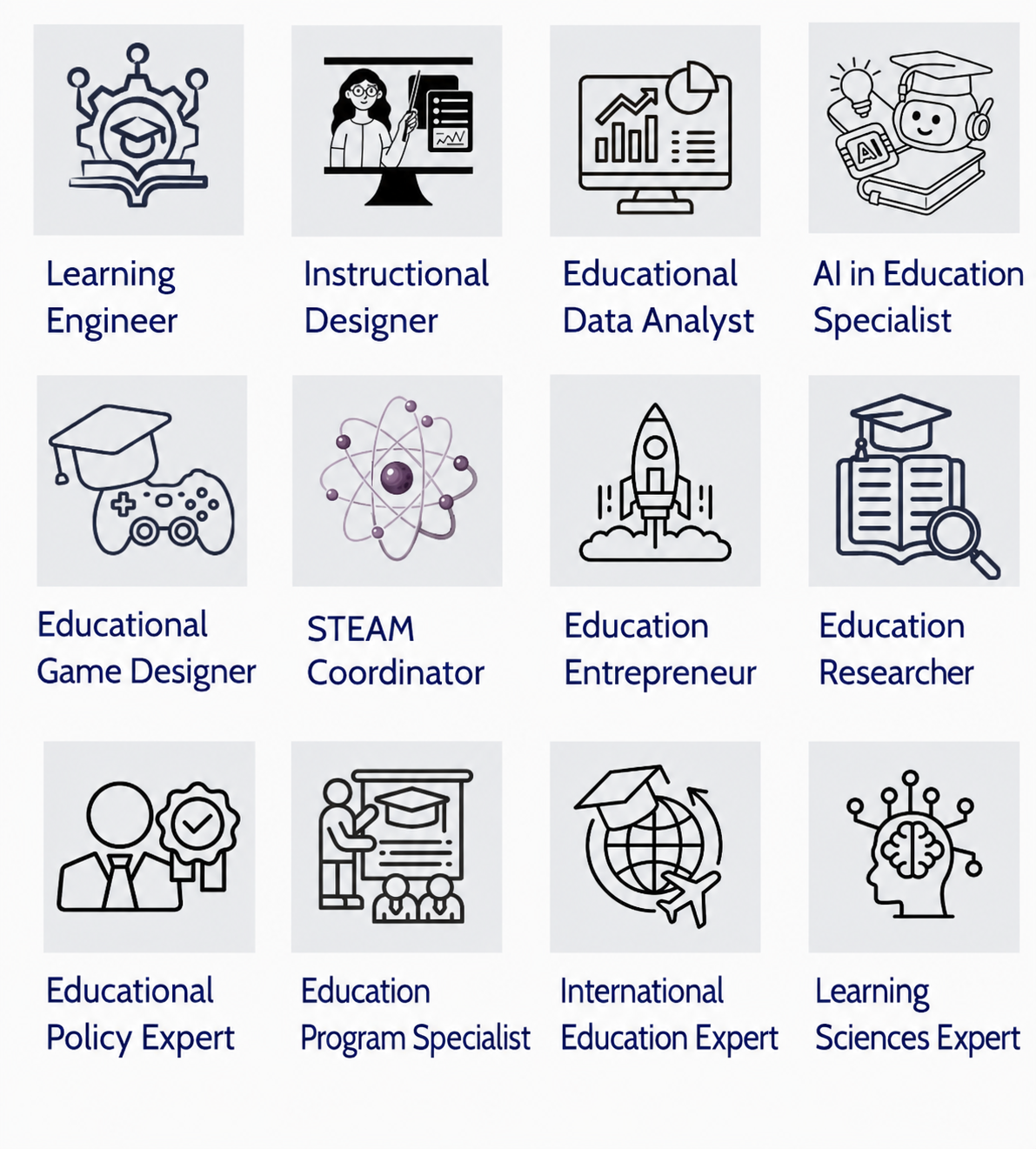
The Teacher+ model prepares graduates not only for traditional teaching roles but also for diverse career pathways that respond to the evolving needs of education. Equipped with competencies in educational technology, data literacy, learning design, and innovative pedagogy, Teacher+ graduates are positioned to contribute across a wide range of educational contexts.
Some of the prominent career pathways available to Teacher+ graduates include:
1. Classroom Teacher
Educators who design contemporary learning experiences through innovative pedagogical approaches, technology-enhanced environments, and data-informed instructional practices.
2. Educational Technology Specialist
Professionals who develop digital learning tools and work with educational platforms and technology-supported learning systems.
3. Corporate Learning and Development Trainer
Education professionals who design and facilitate professional development programs within companies and corporate academies.
4. Digital Learning Designer
Specialists who design instructional content, learning experiences, and educational programs for online and hybrid learning environments.
5. Educational Game Designer
Creative professionals who support learning through gamification and develop educational digital or physical games.
6. Education Data Analyst
Data-oriented professionals who analyze learning data to inform educational decision-making and contribute to the improvement of educational programs.
7. STEM / STEAM Coordinator
Educational leaders who design, coordinate, and manage interdisciplinary programs that integrate science, technology, engineering, arts, and mathematics.
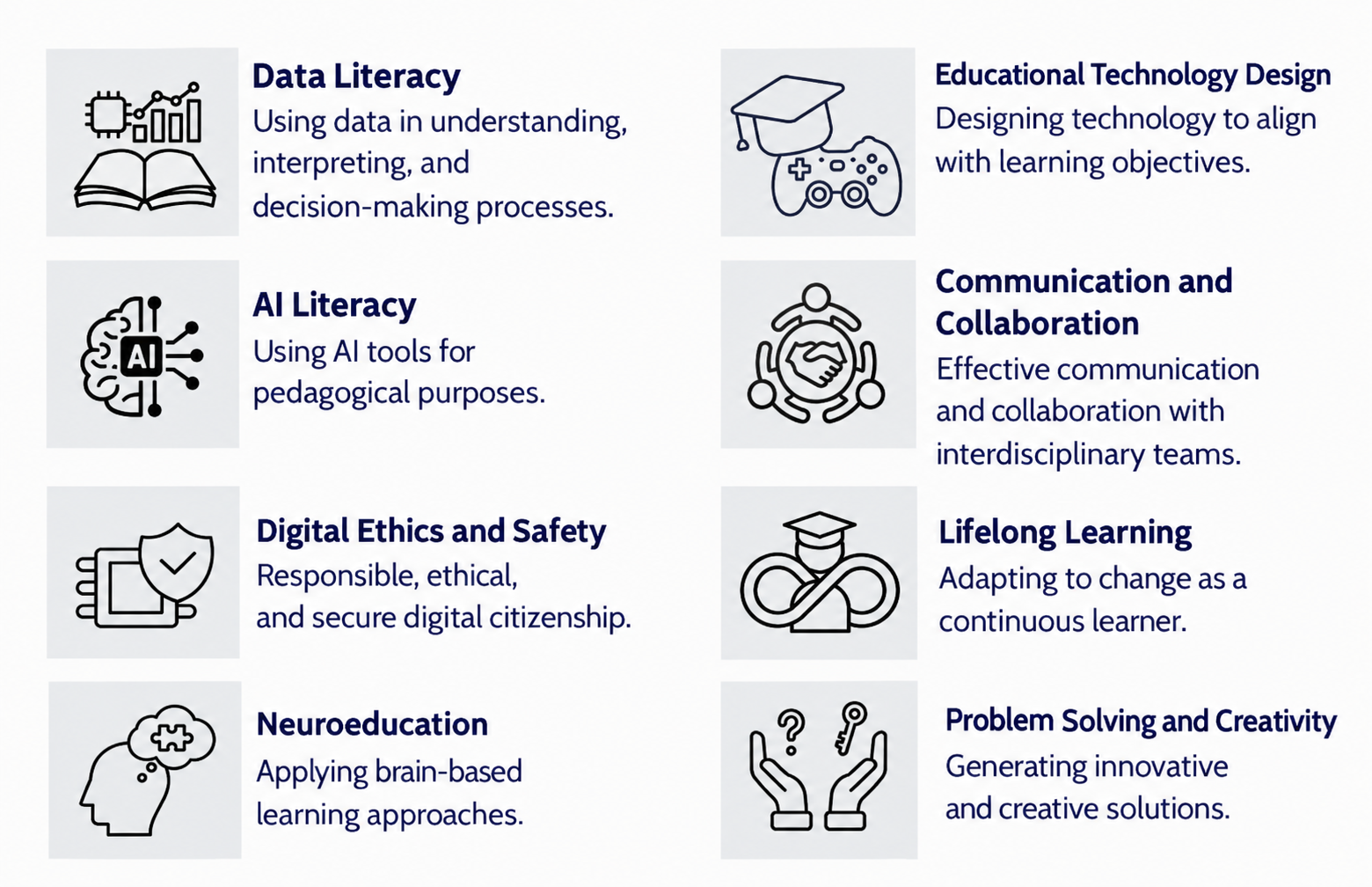
The Teacher+ model prepares future educators not only for classroom practice but also to become educational leaders who make data-informed decisions, use technology ethically and effectively, and design learning experiences grounded in scientific evidence. Through the knowledge, skills, and experiences gained throughout the program, graduates develop the competencies required to thrive in an evolving educational landscape.
The key competencies developed by Teacher+ graduates include:
1. Data Literacy
The ability to interpret data generated through learning processes and use evidence to support data-informed educational decision-making.
2. Artificial Intelligence Applications
The competence to utilize AI-powered learning tools to enhance instructional practices and design personalized learning experiences.
3. Digital Ethics
Developing awareness of data privacy and security, responsible technology use, and ethical practices in educational settings.
4. Neuropedagogy
An approach to designing instruction by understanding how the brain processes learning, and applying insights from neuroscience to educational practice.
5. Educational Technology Applications
The ability to create effective, innovative, and inclusive learning environments through the purposeful use of digital tools and educational technologies.